
W. A. MOZART - OVERTURE TO THE MAGIC FLUTE
Mozart himself conducted the first performance of his opera The Magic Flute in Vienna in 1791, just two months before his death. The work has since become a classic of the operatic repertoire worldwide, thanks to its distinctive storyline and extraordinary music. At the upcoming ticketed Concert No. 143, the Vietnam National Symphony Orchestra will perform the overture that opens the opera.
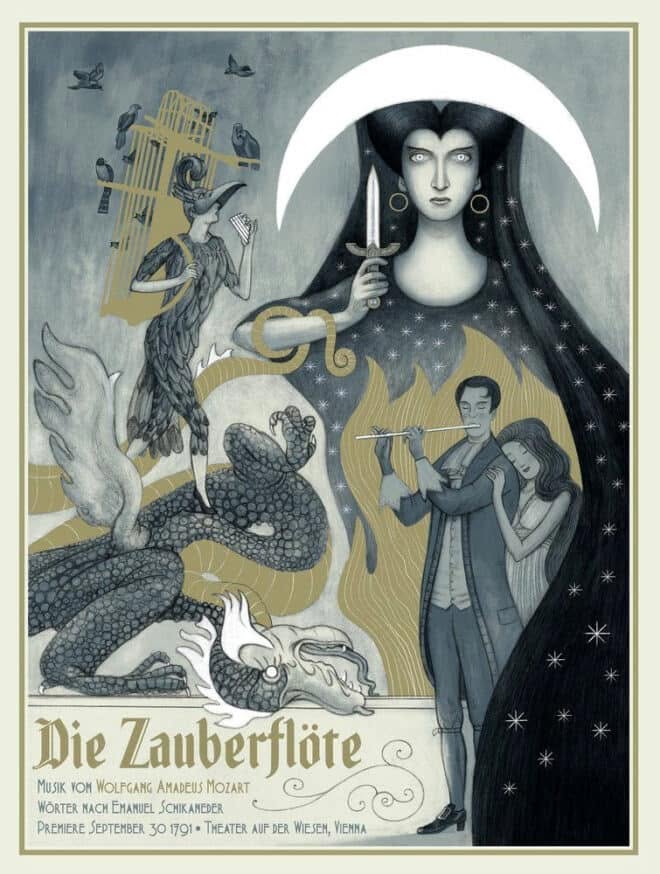
Like many of Mozart’s other works, the overture serves to guide the audience and prepare them for the atmosphere of the story that is about to unfold. In Mozart’s time, overtures did not always share much musical material with the opera that followed. In The Magic Flute, however, Mozart closely connects the musical language of the overture with that of the entire opera, particularly through a striking motif consisting of three chords. Many scholars have associated this three-chord motif with the number three, a symbol of Freemasonry. The motif appears right at the beginning of the overture, is repeated throughout the piece and the opera, and becomes a musical marker for several important scenes.
In terms of form, the overture to The Magic Flute follows the Classical sonata form, consisting of three sections: an opening exposition presenting two themes; a development section in the middle, where the themes undergo various transformations; and a final recapitulation in which the principal themes return. Can you hear the slow, solemn Adagio introduction with which Mozart opens the overture? This introduction foreshadows the atmosphere of the ceremonial scene and the solemn prayer of the priest that appear later in the opera.
After the slow introduction, can you hear a lively Allegro theme beginning softly at a moderate dynamic level and gradually building in intensity? This is Mozart’s way of suggesting the humorous, playful and bright aspects of the opera. Next comes the contrasting second theme, heard almost like a musical question-and-answer between the woodwind instruments.
If you listen carefully, you can also hear clues signalling the beginning of the development section: the atmosphere changes as the three solemn chords return, after which the principal themes reappear in new forms and in different keys. Mozart develops them in numerous ways, creating a rich and varied musical landscape. Finally, the recapitulation reaffirms these themes once again in the original tonic key of E-flat major.
This approach to structure is characteristic of sonata form, which Mozart frequently employed in his later overtures.
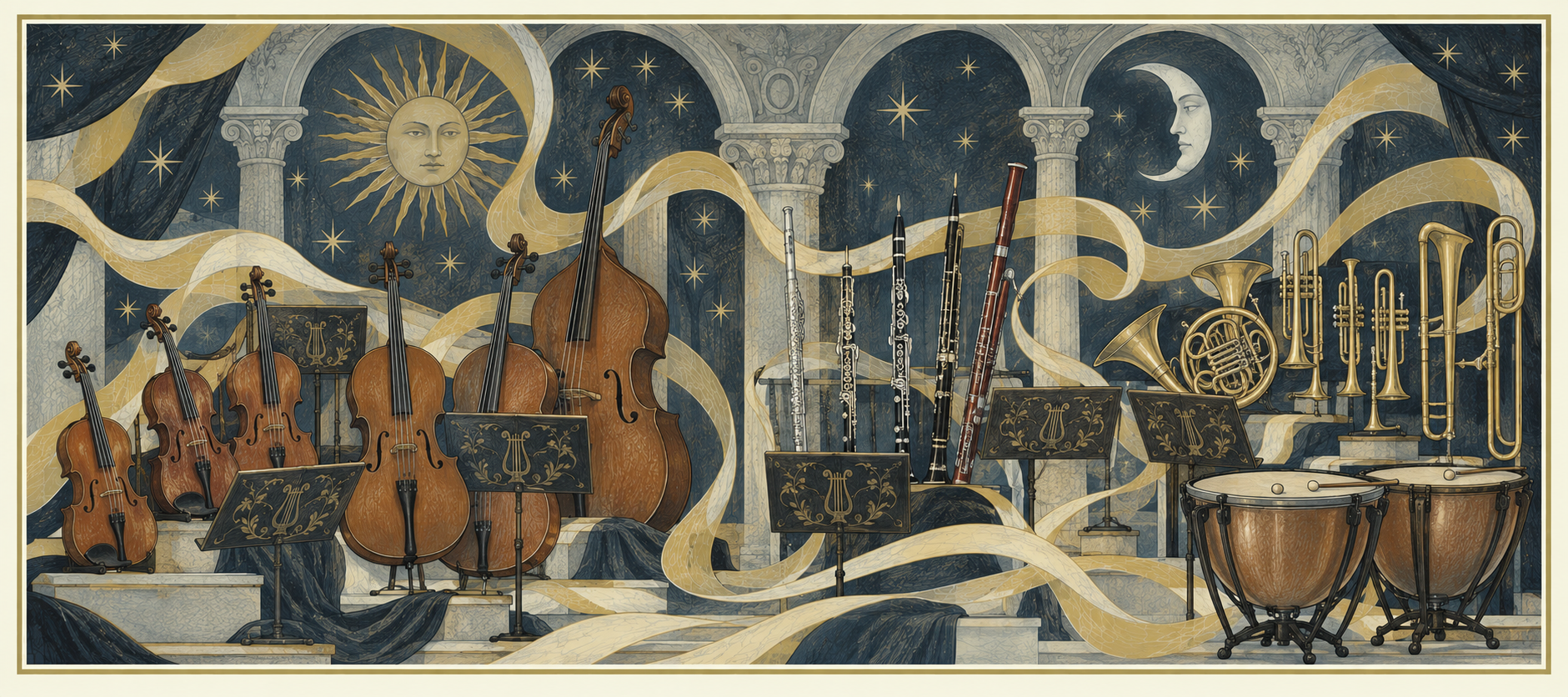
In terms of orchestral colour, the instruments heard in the overture all belong to the standard Classical-period orchestra: the full string section of violins, violas, cellos and double basses; the woodwinds, including flute, oboe, clarinet and bassoon; and the brass section, with horns, trumpets and trombones, together with timpani from the percussion section.
The overture achieves a perfect balance between many contrasting elements: passages of solemn stillness alongside lively and agile sections; moments that seem almost to whisper a story alongside exhilarating bursts of intensity; tension followed by release. All these elements are blended into a single musical whole that remains cohesive, rich, elegant and delightfully witty. To achieve such a balance is, indeed, something that only Mozart could master!
Related News
CLAUDE DEBUSSY - PRINTEMPS
The idea I had was to compose a work in a very special color which should cover a great range of feelings. It is to be called Printemps, not a descriptive Printemps, but a human one.
HISATADA OTAKA - FLUTE CONCERTO OP.30B
Otaka began sketching his Flute Concerto in 1948, when Japan was still under Allied occupation. In 1951, he revised and expanded the work for a larger orchestra. The concerto is a representative example of the flute concerto repertoire in twentieth-century Japan. Rich in lyrical expression, it combines technically demanding solo passages with gentle, flowing melodies, set within a balanced orchestral structure. The flute writing is both agile and richly varied in colour.
JOSEPH HAYDN – SYMPHONY NO. 94 “SURPRISE” UNEXPECTED PRANKS IN CLASSICAL MUSIC
Did you know that some classical composers loved to play little tricks on their audiences right in the middle of their own works? Sometimes, music gently draws us into a peaceful flow of emotions, only for the composer, in some charming and delightful way, to make us smile almost unconsciously with a leisurely musical phrase, a mocking horn call, or a sudden, thunderous outburst.
THE VIETNAM NATIONAL SYMPHONY ORCHESTRA BRINGS “THE HANOI SYMPHONY” TO LIFE IN “THE FLOW OF THANG LONG”
On the evening of 10 October 2026, the special artistic programme The Hanoi Symphony, themed The Flow of Thang Long, took place at Ho Guom Opera House in a solemn and deeply moving atmosphere. The event marked the 72nd anniversary of Hanoi’s Liberation Day (10 October 1954 – 10 October 2026) and the 27th anniversary of Hanoi being recognised by UNESCO as a City for Peace.