
JOSEPH HAYDN – SYMPHONY NO. 94 “SURPRISE” UNEXPECTED PRANKS IN CLASSICAL MUSIC
Did you know that some classical composers loved to play little tricks on their audiences right in the middle of their own works? Sometimes, music gently draws us into a peaceful flow of emotions, only for the composer, in some charming and delightful way, to make us smile almost unconsciously with a leisurely musical phrase, a mocking horn call, or a sudden, thunderous outburst. These moments are when composers introduce a refreshing touch of playfulness into their musical creations.
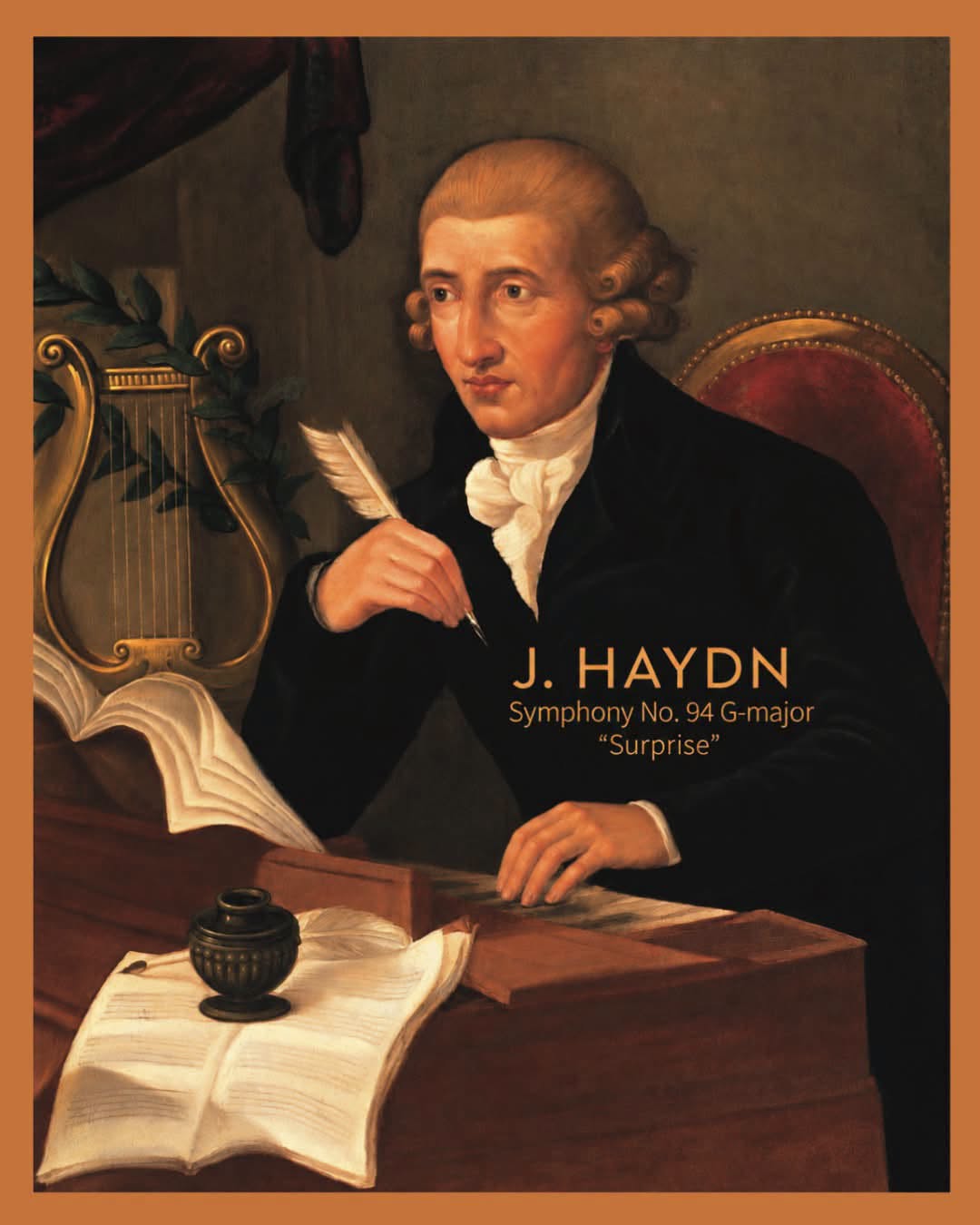
When it comes to musical jokes, many people would immediately think of Mozart, with his mischievous musical moments. Yet before Mozart, there was his mentor and lifelong friend, Joseph Haydn (1732–1809), the composer who helped shape the symphony as a genre and was every bit as witty and playful. One outstanding example is his Symphony No. 94 in G major, composed in 1791.

The work was composed during Haydn’s first visit to London and received its premiere on 23 March 1792. It bears the German subtitle mit dem Paukenschlag — “with the drumbeat.” Its slow second movement, Andante, is one of the best-known movements in the classical repertoire.
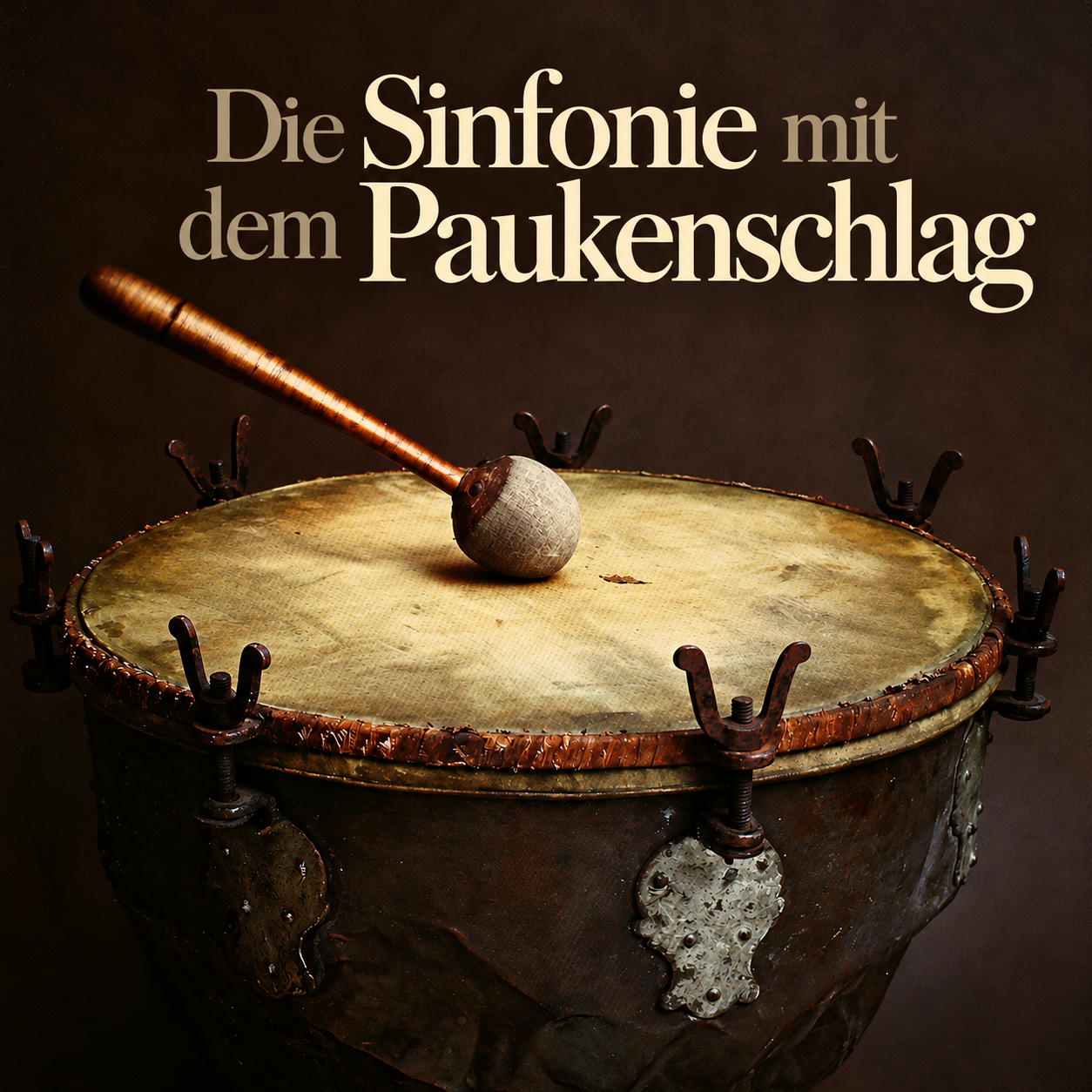
The German subtitle refers to the unexpected accent in the symphony’s second movement. In fact, the surprise is not produced by the timpani alone, but by a sudden, powerful accent involving the entire orchestra. Immediately afterwards, the music returns to its former tranquillity, as though nothing unusual had happened. This dramatic moment explains why the symphony became known in England as The Surprise. In Vietnam, it is commonly translated as “Surprise” (Ngạc nhiên), as in music history textbooks at the Vietnam National Academy of Music, although it is also referred to as “Unexpected” (Bất ngờ), and some have even jokingly called it “The Startler” (Giật mình).

In his later years, Haydn was asked whether he had deliberately introduced the “surprise” to wake up audiences during an overly peaceful movement. He replied: “No, it was my concern to surprise the public with something new.”
Like the other symphonies in the so-called “London” series, Symphony No. 94 consists of four movements.
I – Adagio cantabile – Vivace assai
The symphony opens with Adagio cantabile, meaning slow and songlike, with a gentle, lyrical character. The opening melody begins with a short motif introduced by the oboe, immediately answered by the violins in a contrasting yet equally delicate phrase. The main section of the movement is marked Vivace assai, indicating a very lively tempo. Although the principal themes are not sharply contrasted, frequent alternations between loud and soft passages lend the music remarkable flexibility and keep the listener engaged throughout.
II – Andante
Marked Andante, this movement unfolds in a calm, unhurried manner, yet conceals unexpected moments of sudden, emphatic accents. These are where Haydn’s humour and mischievous spirit become most apparent. The movement takes the form of variations on a theme, which is presented right at the beginning. The theme itself is remarkably brief, consisting of just eight bars.
III – Menuetto – Trio
The third movement opens in a festive, exuberant atmosphere. The principal theme of the Menuetto is presented by the flute, bassoon and violins. The central Trio section contrasts with the opening, relying primarily on the strings. The Menuetto then returns before the music moves into the finale.
IV – Allegro molto
Marked Allegro molto, meaning very fast, the finale is characteristic of Haydn’s style, with a buoyant rhythmic pulse, abundant energy and an irresistible sense of momentum. The movement begins with a dance-like melody, first introduced softly by the strings. This musical idea returns repeatedly throughout the movement, passed between different instrumental sections of the orchestra.
Mai Hạnh, 12.2022.
Related News
CLAUDE DEBUSSY - PRINTEMPS
The idea I had was to compose a work in a very special color which should cover a great range of feelings. It is to be called Printemps, not a descriptive Printemps, but a human one.
HISATADA OTAKA - FLUTE CONCERTO OP.30B
Otaka began sketching his Flute Concerto in 1948, when Japan was still under Allied occupation. In 1951, he revised and expanded the work for a larger orchestra. The concerto is a representative example of the flute concerto repertoire in twentieth-century Japan. Rich in lyrical expression, it combines technically demanding solo passages with gentle, flowing melodies, set within a balanced orchestral structure. The flute writing is both agile and richly varied in colour.
THE VIETNAM NATIONAL SYMPHONY ORCHESTRA BRINGS “THE HANOI SYMPHONY” TO LIFE IN “THE FLOW OF THANG LONG”
On the evening of 10 October 2026, the special artistic programme The Hanoi Symphony, themed The Flow of Thang Long, took place at Ho Guom Opera House in a solemn and deeply moving atmosphere. The event marked the 72nd anniversary of Hanoi’s Liberation Day (10 October 1954 – 10 October 2026) and the 27th anniversary of Hanoi being recognised by UNESCO as a City for Peace.
W.A.MOZART - SINFONIA CONCERTANTE K.297b
Mozart’s Hopes at Twenty